Frequently asked questions
Find answers to common questions about Google data centers and our communities.
General
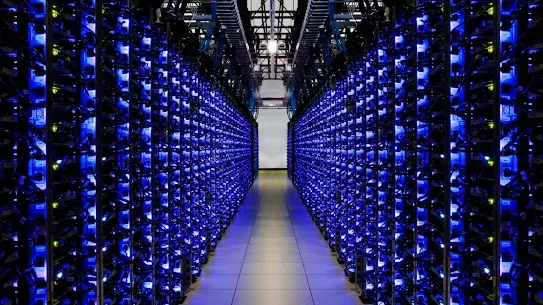
A data center is a facility with many computers that store and process large amounts of information. Our data centers keep all of Google’s products and services up and running around the clock and around the world. Whenever you access Gmail, edit your documents, or do a Google search, you're using one of our data centers and have the power of a supercomputer at your fingertips. Google data centers also play a critical role in running the digital economy, supporting critical services like hospitals, schools, and fire departments that improve community resilience, and pioneering sustainable infrastructure innovations that keep the communities where we are located connected.
Because we take security seriously at our data centers, we cannot offer public tours. However, you can watch our 360° tour of our data center at The Dalles, Oregon, and browse our photo gallery.
Google data center staff members ensure that each facility’s computers are running at their highest speed and efficiency 24 hours a day, seven days a week. Our jobs require a variety of skills and backgrounds — from entry-level technology assistants to experienced data center managers. Meet the amazing people behind the technology that lets us build for everyone, and browse our career opportunities.
We’ve done the work for you! Take a look inside Google’s data centers around the world and see the technology, people, and places that keep our products online.
We thank you for your interest. Please contact our press team at press@google.com.
Sustainability
In 2021, we set an ambition to reach net-zero emissions across all of our operations and value chain by 2030. To meet this ambition, we aim to reduce over time our absolute, combined scope 1, 2 (market-based), and 3 emissions by 50% from a 2019 base year, and we plan to invest in a range of carbon removal solutions to neutralize our remaining emissions.
A component of this moonshot is another ambition — running on 24/7 carbon-free energy on every grid where we operate by 2030.
At Google, we’re deeply committed to responsibly managing the environmental footprint of our operations and unlocking the power of AI for the planet. While the path to achieving our climate ambitions will not be linear—given our AI infrastructure buildout is currently accelerating faster than the grid is decarbonizing—we remain focused on scaling abundant and affordable clean power globally and progressing technological innovations that drive down emissions across our operations and the broader industry.
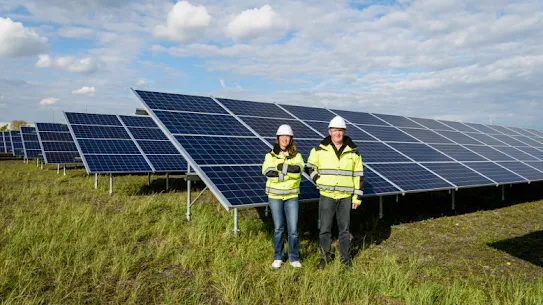
Google is one of the world’s largest corporate purchasers of clean energy in the world. We remain focused on scaling abundant and affordable clean power globally and progressing technological innovations that drive down emissions across our operations and the broader industry.
The AI revolution has made the last five years especially transformative, and we’re proud of the progress we’ve achieved. In 2025 alone, we signed agreements for over 12 GW of net-new clean energy1. By combining this record-breaking procurement with our industry-leading infrastructure, we’re working to ensure that every megawatt is used as efficiently as possible. We’re investing in reliable, clean capacity on the local grids that support our data centers, and we’re advancing the next generation of clean energy sources like nuclear and enhanced geothermal while making long-term bets on breakthrough technologies like fusion.
For more details, check out our latest 2026 Environmental Report.
1The total GW figure represents clean energy procured through power purchase agreements, energy storage agreements, and agreements under which Google receives environmental attribute certificates. Actual generation may vary from contracted amounts based on project modifications, terminations, and performance.
We buy electricity directly from new clean energy projects through various methods depending on the market, including: contracting directly via long-term power purchase agreements (PPAs); working with utilities or developers to buy and deliver carbon-free energy (CFE); structuring energy supply contracts with energy providers; and making targeted investments in renewable energy to enable additional projects on the grid. See the 2026 Environmental Report for more information.
Google is committed to being an active member in the communities we call home. Close collaboration with community leaders, local utilities, and local organizations is a priority for us to identify opportunities for meaningful community and global support.
See the 2026 Environmental Report for more information.
Innovating across our AI stack is the foundation of our strategy to minimize our systems' energy profile. This includes both increasing the energy efficiency of our data centers with custom-built hardware and more efficient model architecture and supporting grid reliability by using demand response and flexibility, when possible, to help grids meet their highest need events.
See the 2026 Environmental Report for more information.
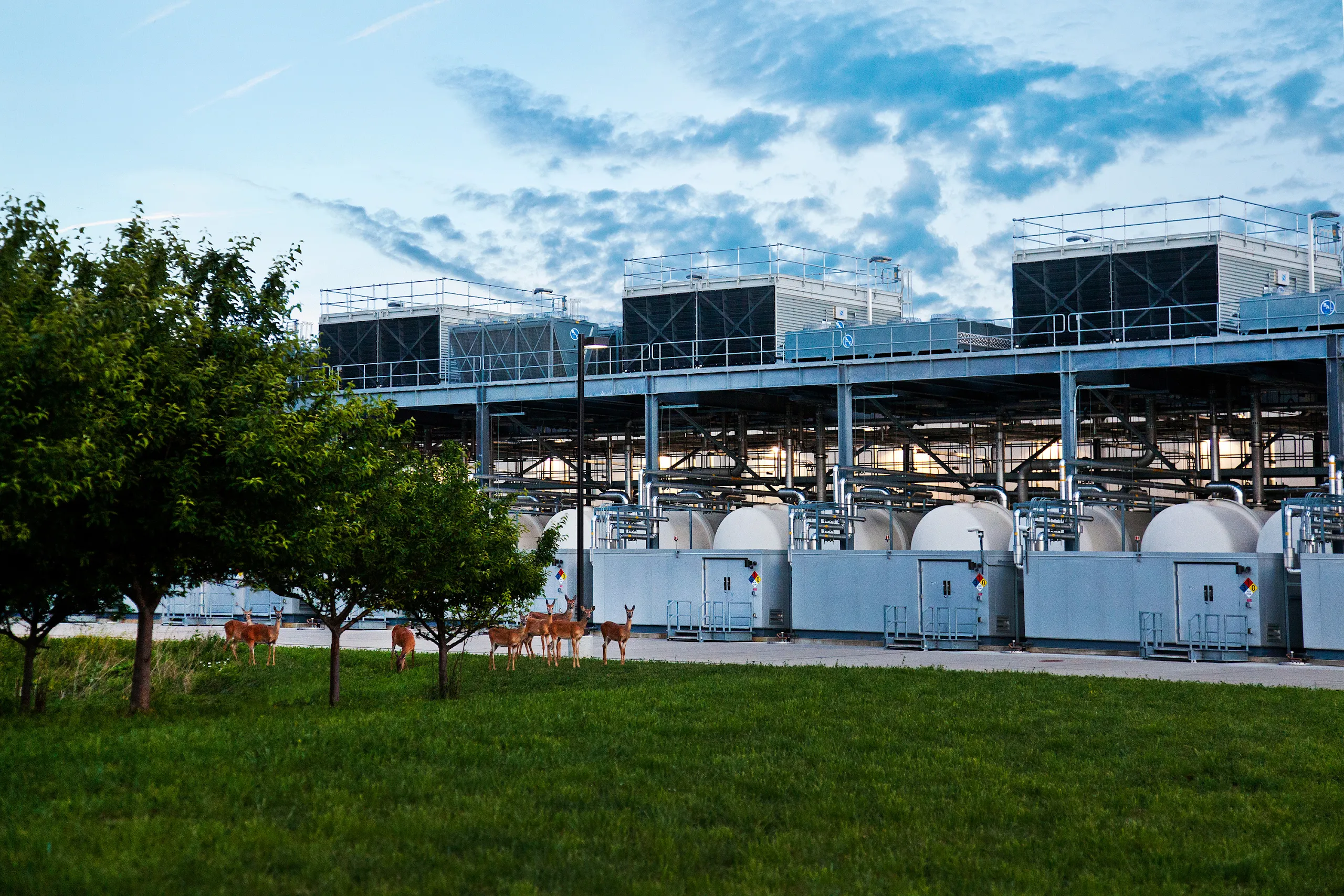
Water plays an important role in our data centers — cooling our servers, regulating indoor temperatures, and keeping our products up and running. In fact, water cooling has been shown to help reduce energy consumption and related carbon emissions when compared to air-based cooling. While it will take more time for electricity grids to decarbonize, we’ll continue using water cooling to improve our energy efficiency in certain geographies. Recognizing that this tradeoff will increase our data center water footprint, we’re prioritizing responsible water use and water replenishment at new sites from the start.


Google is one of the world’s largest corporate purchasers of clean energy in the world. We remain focused on scaling abundant and affordable clean power globally and progressing technological innovations that drive down emissions across our operations and the broader industry.
The AI revolution has made the last five years especially transformative, and we’re proud of the progress we’ve achieved. In 2025 alone, we signed agreements for over 12 GW of net-new clean energy.1 By combining this record-breaking procurement with our industry-leading infrastructure, we’re working to ensure that every megawatt is used as efficiently\ as possible. We’re investing in reliable, clean capacity on the local grids that support our data centers, and we’re advancing the next generation of clean energy sources like nuclear and enhanced geothermal while making long-term bets on breakthrough technologies like fusion.
For more details, check out our 2026 Environmental Report.
1The total GW figure represents clean energy procured through power purchase agreements, energy storage agreements, and agreements under which Google receives environmental attribute certificates. Actual generation may vary from contracted amounts based on project modifications, terminations, and performance.
Google aims to “return” or improve the water quality and ecosystem health in the watersheds and communities where we operate through investments in water stewardship projects.
Workforce Development
Our program leads the effort to grow local talent for tomorrow's data centers. We aim to equip individuals in underinvested communities with essential digital skills and training. By focusing on digital literacy and job readiness, we help bridge the skills gap, fostering economic mobility and creating pathways to success in the evolving job market.
Google’s STAR Program offers short-term training aimed at preparing individuals for careers in trades, such as construction, carpentry, mechanical, electrical, and fiber optics. Designed to bridge the gap in the skilled trades workforce, STAR not only equips participants with essential skills, but also focuses on increasing diversity and opportunity within these high-demand fields.
The STAR Program prepares individuals for entry-level roles in construction and skilled trades, increases entry-level workforce in these sectors, and enhances diversity in construction and skilled trades through outreach in underinvested communities.
The STAR Program is currently available in the United States in Indiana, Missouri, Nebraska, Ohio, South Carolina, and Virginia. To learn more about the programs in your area, contact your state STAR representatives about future initiatives:
- Indiana: Star.WorkforceIN@gmail.com
- Missouri: Star.WorkforceMO@gmail.com
- Nebraska: Star.WorkforceNE@gmail.com
- Ohio: Star.WorkforceOH@gmail.com
- South Carolina: Star.WorkforceSC@gmail.com
- Virginia: Star.WorkforceVA@gmail.com
If you have a general inquiry or question about when a program is coming to your area, email us at gdc-wfd@google.com.
Currently there are two learning tracks:
- Construction: Hands-on industry experience focusing on carpentry, mechanical, electrical trades, blueprint reading, and math skills.
- Fiber optics: Cutting-edge training in fiber-optics cable installation.
The program also includes basic safety certifications, blueprint reading, industry-level math, and hands-on skills training. Soft-skills training and wrap-around services are also program elements.
The STAR Program is a short-term bootcamp-style training that is located near Google’s data centers with ongoing construction or expansion.
Participants receive paid training with employment networking opportunities. Additionally, local trade organizations offer insights into career opportunities.
Job opportunities are available for successful program completers provided they pass the employer’s job requirements.
Candidates must be age 18 or older by the first day of class, hold a high school diploma, GED, or equivalent, and have a willingness to learn.
Please email your state's STAR representatives for more information:
- Indiana: Star.WorkforceIN@gmail.com
- Missouri: Star.WorkforceMO@gmail.com
- Nebraska: Star.WorkforceNE@gmail.com
- Ohio: Star.WorkforceOH@gmail.com
- South Carolina: Star.WorkforceSC@gmail.com
- Virginia: Star.WorkforceVA@gmail.com
Explore our data center locations
Our locations
Andhra Pradesh, India (in development)
Chonburi, Thailand (in development)
Selangor, Malaysia (in development)
Dietzenbach, Germany (in development)
Farciennes, Belgium (in development)
Groningen, Netherlands (in development)
Horndal, Sweden (in development)
Kronstorf, Austria (in development)
Skien, Norway (in development)
Armstrong County, Texas (in development)
Cedar Rapids, Iowa (in development)
Chesterfield County, Virginia (in development)
Dorchester County, South Carolina (in development)
Haskell County, Texas (in development)
Hermantown, Minnesota (in development)
Kansas City, Missouri (in development)
LaGrange, Georgia (in development)
Lincoln, Nebraska (in development)
Mesa, Arizona (in development)
Michigan City, Indiana (in development)
Muskogee County, Oklahoma (in development)
New Florence, Missouri (in development)
Pampa, Texas (in development)
Pine Island, Minnesota (in development)
Stillwater, Oklahoma (in development)
West Memphis, Arkansas (in development)
Wilbarger County, Texas (in development)