Driving circularity through waste minimization efforts
Google employs a zero-waste strategy to manage operational waste and end-of-life data center equipment responsibly. To ensure users have easy and secure access to their data, we continually upgrade to the newest hardware generations, phasing out older equipment that has reached the end of its functional life at Google.
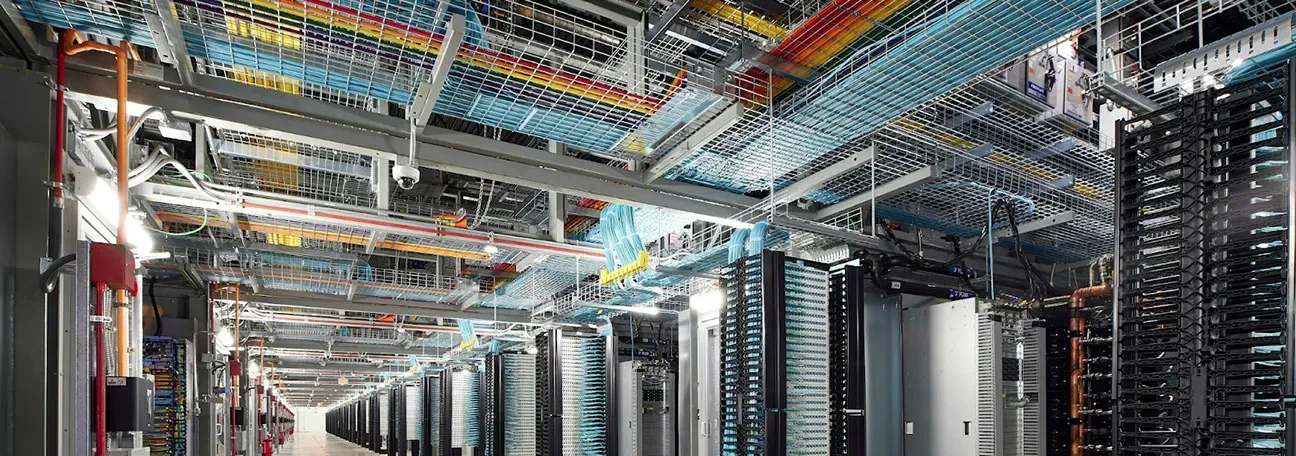
Diverting data center waste from landfills
Pursuing a holistic approach to waste minimization
Google has an ambition to achieve Zero Waste to Landfill for our global data center operations — the industry standard for “zero waste” is diverting more than 90% of waste from landfills and incineration. This strategy includes investigating novel recycling techniques and optimizing the reuse of equipment and packaging materials. As of 2025, two of our data centers and one warehouse have achieved UL 2799 Zero Waste to Landfill validation, demonstrating our commitment to minimizing waste and responsibly managing the waste we do produce.
-
84%
In 2024, we diverted 84% of our operational waste from disposal across our global Google-owned and -operated data centers.

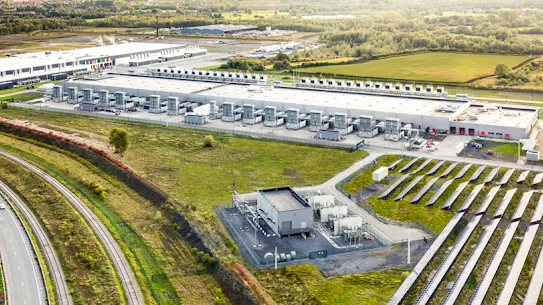
Google’s first data center to achieve UL 2799 Zero Waste to Landfill validation was in the Lowcountry, South Carolina.
Reverse supply chain
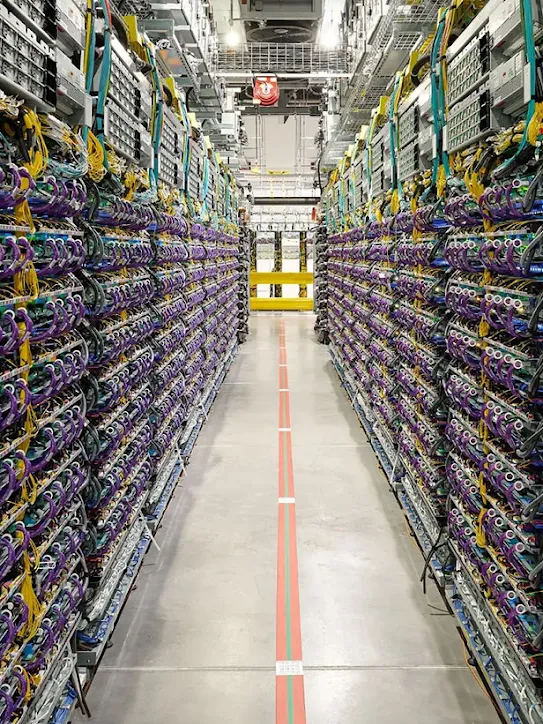
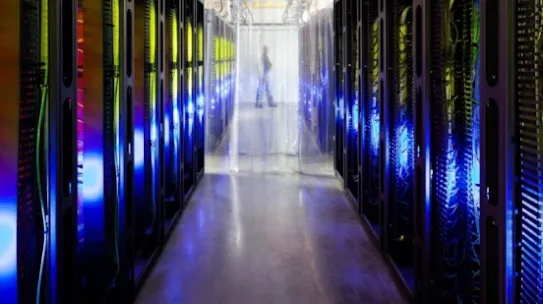
This server aisle is at our New Albany data center campus in Ohio.
Maximizing resource utilization
Each year, millions of assets (such as servers and networking equipment) and components (modular pieces that can be removed as part of daily operations or when the asset is harvested for parts) from Google data centers find a second life. These materials flow through what is called our reverse supply chain, where we evaluate and carefully disassemble decommissioned hardware, allowing us to recover parts for reuse, resale, or recycling. This systematic approach achieves critical goals for Google:
- Hardware refresh: We continuously upgrade our equipment to enhance energy efficiency, introduce new capacity, and improve overall capabilities.
- Extended equipment life: By reusing components, facilitating internal equipment transfers, and upgrading existing machines, we maximize the useful life of our assets, reducing the need for new equipment.
This strategy ensures we manage our hardware with sustainability and performance in mind.
-
8.8 million
We harvested approximately 8.8 million components from our decommissioned hardware for reuse or resale through our reverse supply chain program in 2024.
Mining the Cloud
Critical material recovery in Google’s data centers
Every year, millions of assets and components are decommissioned from Google data centers. These assets and components contain valuable raw materials (such as rare earth elements and precious metals) and represent a potential environmental impact if not managed properly.
Our strategy is to divert data center electronic-waste from landfills through our reuse, remarketing, and recycling efforts. When hardware components reach the end of their functional life — and reuse or resale aren’t viable options — this e-waste is sent for recycling to extract critical raw materials. These materials can then be fed back into the ecosystem to create new products, closing the loop and reducing the demand for newly mined resources.
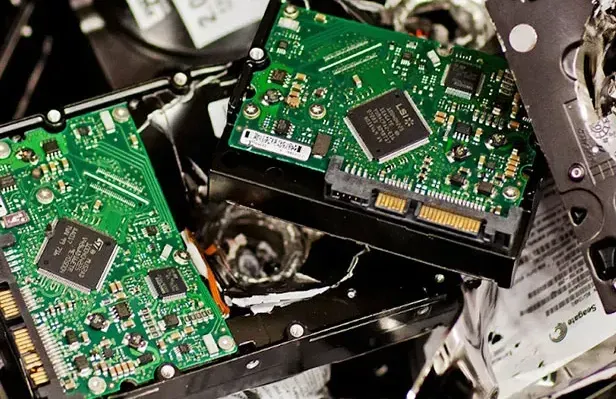
Google collects hard drives for recycling and material recovery.