


Join our team
Google is proud to hire from the community and support the people who keep our data centers running at their best.
Jump to Content
Google is expanding our digital infrastructure in Virginia with three data center campuses in Chesterfield County. These facilities will help power the modern internet — supporting everything from healthcare systems and schools to the everyday online tools we all rely on. We’re committed to collaborating closely with local leaders, residents, and stakeholders to develop these projects thoughtfully and responsibly.
For general inquiries, email us at google-in-chesterfield@google.com.
2029
Google expects to complete Upper Magnolia’s first building.
2028
Google expects to complete the Chester campus.
2027
Google expects to begin construction on the Upper Magnolia campus.
2026
Google begins construction on the Chester campus.
2025
Google announces additional $9 billion in cloud and AI infrastructure in Virginia, including new data centers in Chesterfield County.
At Google, we develop one-of-a-kind facilities, evaluating each site individually to optimize for business needs, the environment, and the local community. Construction is underway across our Chesterfield County campuses following extensive planning with local residents and leaders. These sites represent a significant economic investment in Chesterfield County, creating thousands of construction jobs, hundreds of full-time roles, and hundreds of millions of dollars in local infrastructure improvements. We will continue to update this site as project milestones progress.
NOVEMBER 2026
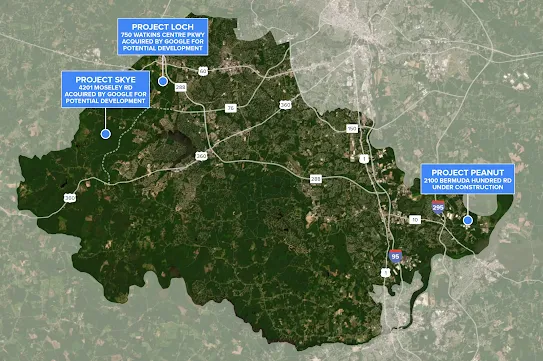
Chesterfield County Google project map
Google is building three data center campuses across Chesterfield County.
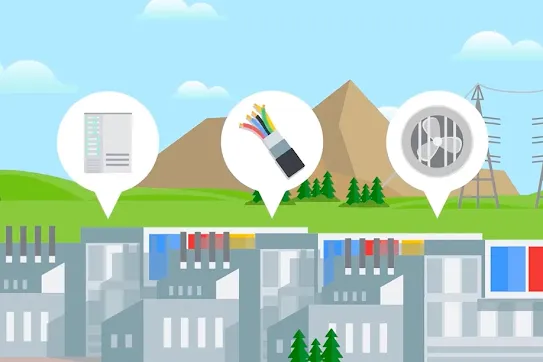
Google data center design
From computing to cooling, this video will walk you through the different layers of a data center’s infrastructure and show how they work together.
Workforce development
Google's investment in the electrical training ALLIANCE and local electrical apprenticeship partners will train an additional 2,741 new apprentices by 2030.
Community support
Google is committed to supporting nonprofits and other organizations that support Chesterfield’s growth. See more about our commitments below.
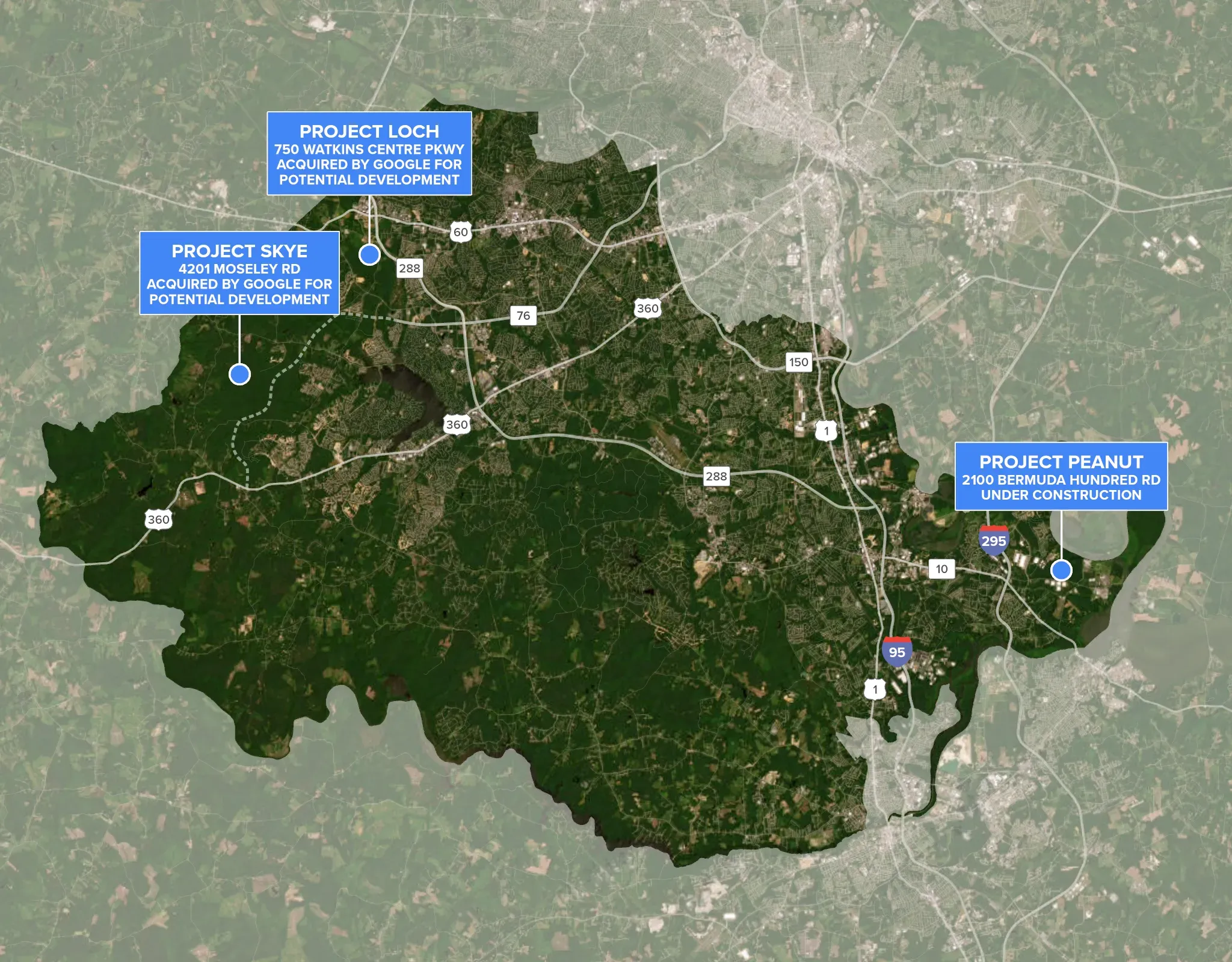
The Chester campus is located in Chester near the Meadowville Technology Park on Bermuda Hundred Road.
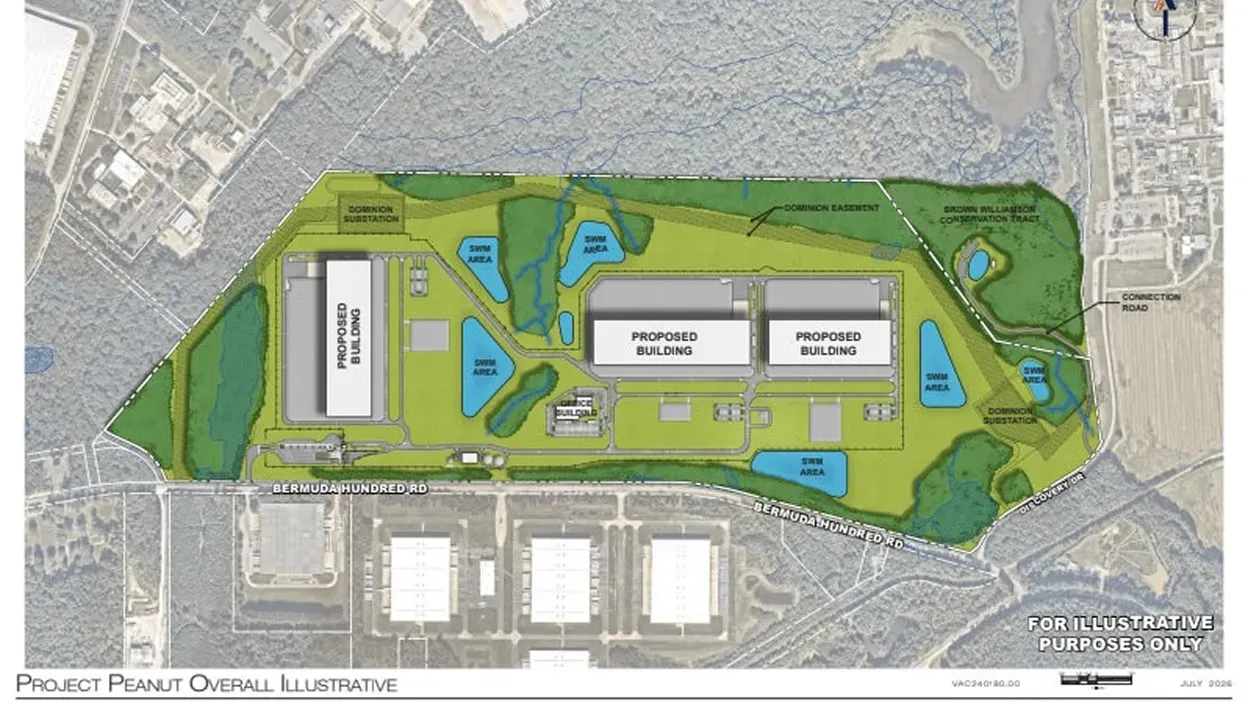
The Chester campus is currently under construction, with the first of three planned buildings scheduled for completion in late 2027. Full campus completion is expected in 2028.
We are exploring a water reuse system to recycle water on-site, with preliminary engineering evaluations underway through December 2026. The Chesterfield County Department of Utilities is the water provider and owns the infrastructure serving the Chester campus. They operate one water treatment facility and have contracts for daily water allocations from the City of Richmond and the Appomattox River Water Authority (ARWA). Between their water treatment plant, ownership in ARWA, and a contract with the City of Richmond, they have a total contracted capacity of 110.5 MGD (million gallons per day) and in 2022 averaged a daily flow of 38.5 MGD.
The Chesterfield County Department of Utilities operates two wastewater treatment plants (WWTPs) — Falling Creek WWTP and Proctors Creek WWTP — and has service agreements with South Central Wastewater Authority and the City of Richmond. Google is funding in-design infrastructure upgrades to provide services to the site.
Google is working with the Virginia Department of Environmental Quality (VA DEQ) to secure the necessary air permits for our data center facilities. These permits are primarily required for the installation and operation of emergency backup generators, cooling towers, and diesel fuel storage tanks. VA DEQ regulates emergency generator usage and issues permits to ensure compliance with federal Environmental Protection Agency (EPA) regulations.
Chesterfield County received an Approved Jurisdictional Determination from the US Army Corps of Engineers (USACE) for 305 acres of project area. Google is committed to responsible wetland management, focusing on impact avoidance during design and implementing comprehensive mitigation and enhancement measures to ensure long-term watershed health.
Construction workers will access the Chester campus from Bermuda Hundred Road. As part of the site plan process, Google and design consultants are coordinating with the Chesterfield Department of Transportation (CDOT) and the Virginia Department of Transportation (VDOT) on any required road improvements to accommodate construction traffic and operational traffic.
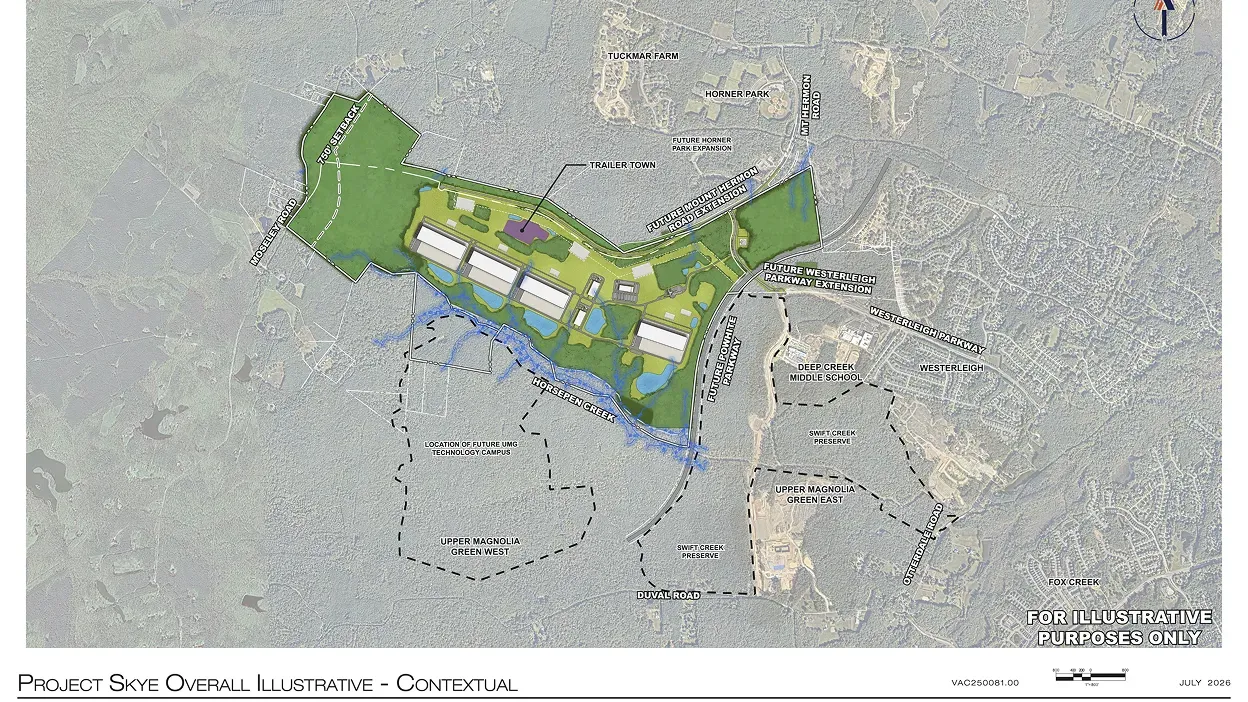
The Upper Magnolia campus is in Moseley, north of a planned industrial campus. The natural corridor of Horsepen Creek is at its southern border.
The Upper Magnolia site lies north of a planned industrial campus, with the natural corridor of Horsepen Creek at its southern border. The site's western boundary is defined by Moseley Road, a local arterial providing regional connectivity, while its eastern edge is delineated by the proposed right-of-way for the future Powhite Parkway extension — an infrastructure project currently under planning as part of the larger industrial campus development initiative.
Spanning ~848 acres of undeveloped, wooded land in Chesterfield County, Virginia, the site has no internal roadways or direct access points. The current lack of infrastructure necessitates road improvements to support both temporary construction logistics and long-term development. Google is covering the entire cost of these upgrades, and we are coordinating closely with the county's plans and previous traffic studies to ensure they benefit the neighborhood.
Once completed, the Upper Magnolia site will consist of four buildings. Construction of the first building is anticipated to start in 2027, targeting a 2029 opening.
Google is currently working with Dominion Energy to secure high-voltage power via their interconnection queue process.
The Chesterfield County Department of Utilities is the water provider and owns the infrastructure serving the Upper Magnolia campus. They operate one water treatment facility and have contracts for daily water allocations from the City of Richmond and the Appomattox River Water Authority (ARWA). Between their water treatment plant, ownership in ARWA, and a contract with the City of Richmond, they have a total contracted capacity of 110.5 MGD (million gallons per day) total contracted capacity, and in 2022 averaged a daily flow of 38.5 MGD.
The county is designing water main extensions to bring water service to the site, and Google will fund the required infrastructure.
The Chesterfield County Department of Utilities operates two wastewater treatment plants (WWTPs) — Falling Creek WWTP and Proctors Creek WWTP — and has service agreements with South Central Wastewater Authority and the City of Richmond. Google is funding in-design infrastructure upgrades to provide services to the site. We’ll design and pay for a continued public sanitary sewer mainline along Horsepen Creek. Final discharge flows and downstream analysis are ongoing, as they are connected to final water usage.
We’ve submitted individual permits and are actively working through the required processes governed by the Virginia Department of Environmental Quality (VA DEQ) and the US Army Corps of Engineers (USACE). Google is committed to responsible wetland management, focusing on impact avoidance during design and implementing comprehensive mitigation and enhancement measures to ensure long-term watershed health.
Google is working with VA DEQ to secure the necessary air permits for our data center facilities. These permits are primarily required for the installation and operation of emergency backup generators, cooling towers, and diesel fuel storage tanks. VA DEQ regulates emergency generator usage and issues permits to ensure compliance with federal Environmental Protection Agency (EPA) regulations.
We’ll install a roundabout at Westerleigh Road and the North/South Connector. Additionally, we’ll extend Westerleigh Road to Mt. Hermon as well as extend Mt. Hermon west toward Moseley Road (stopping about 1,000 linear feet short east of Moseley). Google is coordinating all road improvements with County Parks to connect and provide turn lanes into their Horner Park Expansion project. We will pay for all improvements.
The Watkins Center campus is located in Midlothian at 750 Watkins Center Parkway directly off Highway 288.
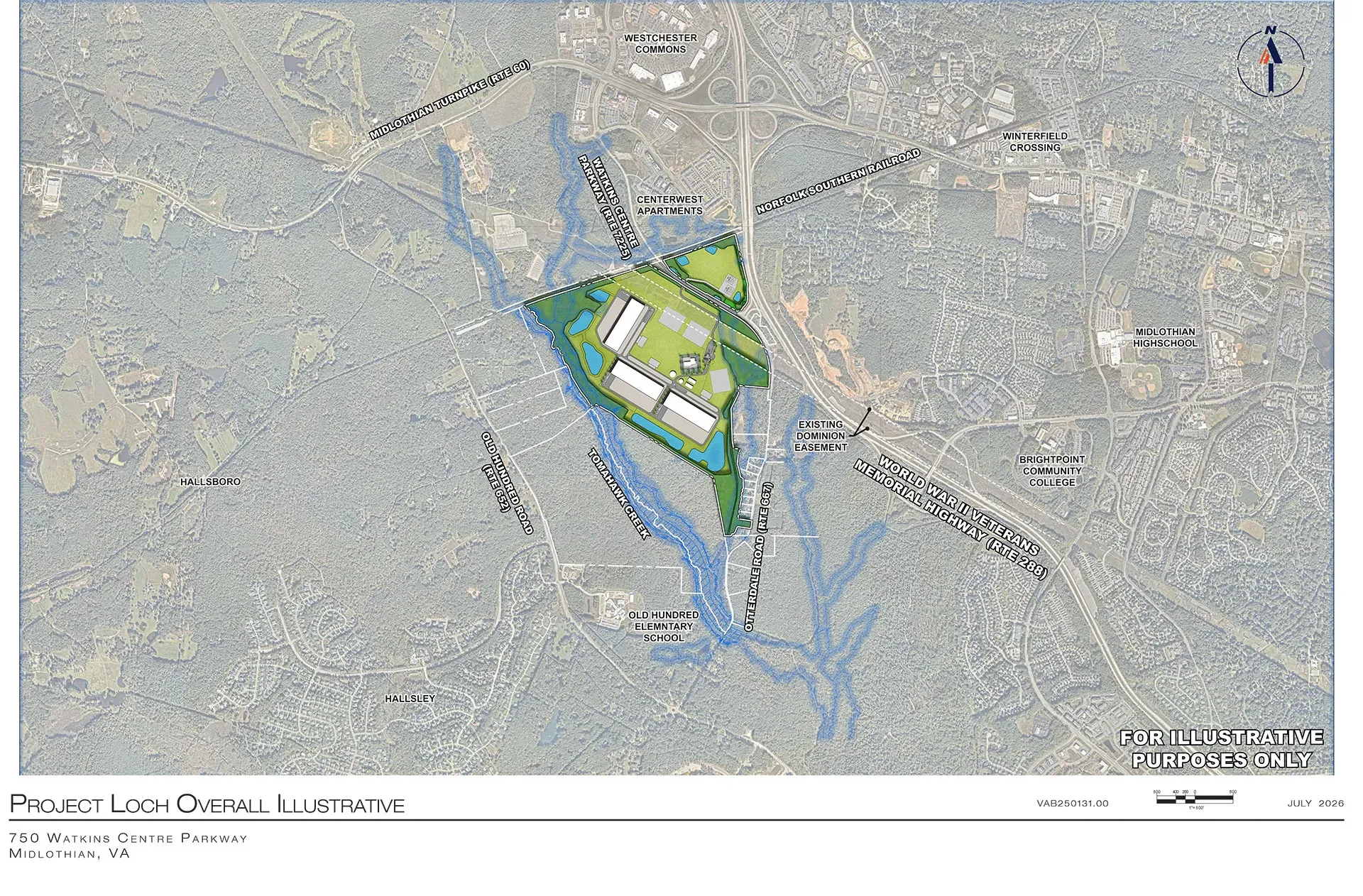
The Watkins Center site consists of three buildings on a 344 acre site. Google expects to start initial site work in early 2027, and it will consist primarily of mass grading efforts. Subsequent construction is pending further infrastructure planning and design.
We’re currently working with Dominion Energy to secure high-voltage power via their interconnection queue process.
The Chesterfield County Department of Utilities is the water provider and owns the infrastructure serving the Watkins Center campus. They operate one water treatment facility and have contracts for daily water allocations from the City of Richmond and the Appomattox River Water Authority (ARWA). Between their water treatment plant, ownership in ARWA, and a contract with the City of Richmond, they have a total contracted capacity of 110.5 MGD (million gallons per day) total contracted capacity, and in 2022 averaged a daily flow of 38.5 MGD.
The county is designing water main extensions to bring water service to the site, and Google will fund the required infrastructure, which will include water main extensions along Dry Bridge Road and Watkins Centre Parkway extending down Otterdale Road. Final improvements are pending alignment with the county's hydraulic model updates.
Chesterfield County Department of Utilities operates two wastewater treatment plants (WWTPs) — Falling Creek WWTP and Proctors Creek WWTP — and has service agreements with South Central Wastewater Authority and the City of Richmond. We’re funding in-design infrastructure upgrades to provide services to the site.
The project site has an existing sanitary sewer. Final discharge flows and downstream analysis are ongoing, as they’re connected to final water usage.
We’ve submitted individual permits and are actively working through the required processes governed by the Virginia Department of Environmental Quality (VA DEQ) and the US Army Corps of Engineers (USACE). Google is committed to responsible wetland management, focusing on impact avoidance during design and implementing comprehensive mitigation and enhancement measures to ensure long-term watershed health.
Air permitting for the first data center is expected to begin in late 2026. Google is working with the VA DEQ to secure the necessary air permits for our data center facilities. These permits are primarily required for the installation and operation of emergency backup generators, cooling towers, and diesel fuel storage tanks. VA DEQ regulates emergency generator usage and issues permits to ensure compliance with federal Environmental Protection Agency (EPA) regulations.
Construction workers will access the site from Watkins Centre Parkway. As part of the site plan process, Google and design consultants are coordinating with the Chesterfield Department of Transportation (CDOT) and the Virginia Department of Transportation (VDOT) on any required road improvements to accommodate construction traffic and operational traffic.
We know you may have questions as Google constructs and operates three data centers in Chesterfield County. Please review the answers to typical questions we are asked, and if you have additional questions, email us at google-in-chesterfield@google.com.
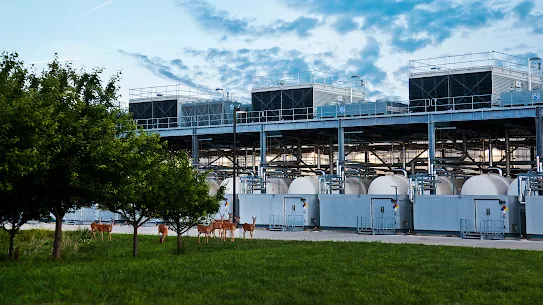
A data center is a facility with many computers that store and process large amounts of information. Our data centers keep all of Google’s products and services up and running around the clock and around the world. Whenever you access Gmail, edit your documents, or do a Google search, you're using one of our data centers and have the power of a supercomputer at your fingertips. Google data centers also play a critical role in running the digital economy, supporting critical services like hospitals, schools, and fire departments that improve community resilience, and pioneering sustainable infrastructure innovations that keep the communities where we are located connected.
Google partners with communities to build data centers the right way. This means we pay our own way and we’ll cover our costs — we will not pass on our costs to Virginians.
Committing locally
We’re an active member in every community we join. Being a good neighbor means investing in the things that matter most – local jobs, schools, nonprofits, and the responsible stewardship of shared resources.
Safeguarding affordability
We protect our neighbors from costs associated with our data centers. We sign long-term energy commitments with built-in safeguards for local residents.
Expanding capacity
We invest in new energy supply wherever we own a data center, because energy growth and ratepayer protection go hand in hand.
Building on Google’s 20-year track record of data center partnerships, our promise is to show up today and tomorrow for every community we call home.
Community partnerships: Google's goal is to be a good neighbor, and that begins with being a valued community partner. We are here to listen and learn what we can do to support Chesterfield County's unique goals and aspirations. Rather than a one-size-fits-all approach, we focus our investments on three programmatic pillars designed to create lasting, growing benefits.
In Chesterfield, we have already partnered with the community to support several initiatives including:
Google pays for 100% of the electricity used to power our data centers and invests in new energy sources that benefit all energy users and keep rates affordable. Google’s energy infrastructure investments benefit the wider energy grid and make it more resilient during weather events. We work with utilities, governments, and communities to bring new energy sources online more quickly and find ways to optimize our existing electrical grid.
Since 2021, our data centers have delivered more than 6x more computing power for the same amount of electricity. And we work with utilities to reduce our power demand during times of peak grid stress, including participating in demand response programs. As the top buyers of clean energy, tech companies play a pivotal role in making projects financially viable and driving innovation in emerging clean technologies.
Virginia residents will not pay for Google’ s infrastructure, as Google has pledged to fully cover our own electricity costs and infrastructure needs.
Data centers can help put downward pressure on utility rates by spreading fixed costs across more energy usage, helping reduce costs for all customers. An average 0.6 cent per kilowatt-hour (kWh) reduction in energy prices was associated with a 10% increase in energy load.
Additionally, in 2026 we announced a new $15 million Energy Impact Fund to help drive down monthly utility bills for households across the state. As the largest data center market in the world, Virginia faces unique challenges and opportunities related to this rapidly expanding sector. In late 2024, the Virginia General Assembly's Joint Legislative Audit and Review Commission (JLARC) published a report that included an in-depth analysis of how data center growth affects Virginia's electric grid, energy policy, and ratepayers. The Virginia JLARC Study indicated that data centers are currently paying their full cost of service for energy.
Google protects water resources through a comprehensive stewardship framework focused on transparency, climate-conscious cooling, and responsible water use. We report annual water usage for each data center location in our Environmental Report to maintain community trust. We also use a science-based framework to assess watershed health, prioritizing alternatives like air-cooling or recycled water in high-risk areas.
A key pillar of Google’s strategy is replenishment, with an ambitious goal to replenish 120% more freshwater than we consume across our data centers and offices by 2030. This initiative actively supports the improvement of water quality and the restoration of ecosystem health in the local communities where Google operates.
In regions like Virginia, Google invests in active and completed stewardship projects to support local watersheds. These efforts include funding forested river bank buffers to filter agricultural nutrients, implementing technology-driven stormwater management retrofits, and partnering on ecological projects like a freshwater mussel nursery to naturally enhance water quality.
Learn more:
Google 2026 Water Stewardship Report
Google 2025 Water Stewardship Report
Transparency
To help communities understand how we manage water responsibly, we report our annual water use for each data center location and every replenishment project we've supported.
Climate-conscious cooling
At each data center campus, our cooling decisions consider the local environment — balancing affordable energy and responsibly sourced water — to minimize the net environmental impact both today and in the future.
Responsible water use
We evaluate the local water source for each data center, using a science-based framework to assess watershed health. In locations with high water risk, we look for alternatives like air cooling or recycled water.
Replenishment and watershed health
We aim to replenish 120% more freshwater than we consume, on average, across our data centers and offices by 2030 and help improve water quality and ecosystem health in the communities where we operate.
Google water stewardship projects
Our water stewardship and wetlands projects in Virginia focus on improving water quality, restoring vital ecosystems, and ensuring long-term watershed health where our data centers operate. These efforts include completed reforestation projects, ongoing technology-driven stormwater management, and major wetland restorations.
Active and completed stewardship projects:
Forested river bank buffers
We invested in the installation of approximately 13 acres of forested river bank buffers on five farms within Virginia's Chesapeake Bay watershed. This completed project, in collaboration with the Alliance for the Chesapeake Bay, uses edge-of-field buffers to filter agricultural nutrients, provide wildlife habitat, and control erosion.
CMAC stormwater retrofits
In Loudoun County, we’re supporting the installation of continuous monitoring and adaptive control (CMAC) technology on four "dry" stormwater detention ponds. This ongoing project in the Potomac River watershed aims to reduce pollutant loads and support the county's water quality targets.
50 Million Mussel Project
We’re partnering with the Potomac Riverkeeper Network to establish a freshwater mussel nursery in National Harbor. This floating laboratory demonstrates the potential for mussels to improve water quality through natural filtration while providing research and educational opportunities.
No. Virginia residents will not pay for Google's infrastructure. We’ve pledged to fully cover our own electricity costs and infrastructure needs. Google’s data centers can help lower utility rates for all by sharing the grid's fixed costs across a larger amount of energy use. In fact, a 10% increase in energy use was associated with an average 0.6 cent per kilowatt-hour (kWh) reduction in energy prices.
Additionally, in 2026 we announced a new $15 million Energy Impact Fund to help drive down monthly utility bills for households across the state. We’re also investing in efforts to support Virginia's grid.
In 2025, Google committed $250,000 to the Virginia Energy Efficiency Council to expand its Energy Efficiency Workforce Initiative, and $700,000 to Appalachian Voices to support the creation of community resilience hubs in Southwest Virginia.
We pay for 100% of the electricity we use to power our data centers, and we invest in new energy sources that benefit all energy users and keep rates affordable. Our energy infrastructure investments benefit the wider energy grid and make it more resilient during weather events.
We work with utilities, governments, and communities to bring new energy sources online more quickly and find ways to optimize our existing electrical grid. Over the past five years, our data centers have delivered more than 6x more computing power for the same amount of electricity. We also work with utilities to reduce our power demand during times of peak grid stress, including participating in demand response programs.
As top buyers of clean energy, tech companies play a pivotal role in making projects financially viable and driving innovation in emerging clean technologies.
Virginia: As the largest data center market in the world, Virginia faces unique challenges and opportunities related to this rapidly expanding sector. In late 2024, the Virginia General Assembly's Joint Legislative Audit and Review Commission (JLARC) published a report that included an in-depth analysis of how data center growth affects Virginia's electric grid, energy policy, and ratepayers. Virginia JLARC Study indicated that data centers are currently paying their full cost of service for energy.1
Arizona: In an April 2025 letter, the Chair of the Arizona Corporation Commission stated that, to date in Arizona, the data center industry is paying its fair share of expansion of power generation and infrastructure under existing utility rate structures and commission practices.2
California: In a press release earlier this year, Pacific Gas and Electric Company (PG&E) estimated that the first 10 gigawatts (GW) of new data center load growth they anticipate could benefit all ratepayers — potentially reducing average electric bills by more than 10% — by spreading fixed grid costs across higher total energy consumption.3
Georgia: Georgia Power confirmed that large energy users, like data centers, are helping them keep rates frozen until 2028, which directly benefits other customers.4
Pennsylvania: In recent testimony, the chairman of the Pennsylvania Public Utility Commission (PAPUC) illustrated how concentrated electricity use by large customers, like data centers, can create system-wide efficiencies. While a city such as Pittsburgh requires thousands of miles of circuits, poles, and transformers to serve many dispersed users, a data center consumes a comparable amount of power through only a few pieces of infrastructure. Because it draws so much electricity with minimal grid buildout, this imbalance between usage and physical assets can help lower per-unit transmission costs and reduce rates for all customers.
Additionally, in a recent filing with the PAPUC, the President of PPL Electric noted the company estimates that the first gigawatt of interconnected load will reduce other customers' transmission costs by 10%.5 6
The PAPUC highlighted that concentrated electricity use by data centers creates efficiencies by requiring minimal grid infrastructure. This helps lower transmission costs and reduce rates for all customers, with PPL Electric estimating a 10% reduction from the first gigawatt of interconnected load.5 6
Kansas: A 2020 study prepared for Kansas officials found that big energy users can actually dilute the average consumer's share of energy demand, reducing costs. Large-load users also pay a greater share of the fixed costs of a utility company, such as surplus energy during low-demand hours, which helps lower the burden on households.7
Mississippi: Entergy noted that large industrial customers reduce the financial burden on residential ratepayers by covering a significant share of fixed grid and generation costs. This support is crucial, as Entergy must replace roughly one-third of its aging power plants. A new data center project will cover its own costs and nearly 50% of these grid improvements, protecting a customer base where over 20% live at or below the poverty level.8
1 Joint Legislative Audit and Review Commission, “Report to the Governor and the General Assembly of Virginia Data Centers in Virginia,” December 9, 2024.
2 Correspondence from Chair Thompson, Arizona Corporation Commission, Docket No. E-00000A-25-0069, Bar Code E000042869, April 3, 2025.
3 Pacific Gas and Electric Company (PG&E), “PG&E Data Center Demand Pipeline Swells to 10 Gigawatts with Potential to Unlock Billions in Benefits for California,” PR Newswire, July 31, 2025.
4 Georgia Power, “Will Data Centers Affect My Power Bill?” September 2025.
5 Stephen M. DeFrank, Chairman of the Pennsylvania Public Utility Commission, “Prepared Testimony before the Senate Democratic Policy Committee,” September 2, 2025.
6 PPL Services Corporation, “Comments of PPL Electric Utilities Corporation,” in En banc Hearing Concerning Interconnection and Tariffs for Large Load Customers, June 6, 2025.
7 London Economics International LLC, “Study of Retail Rates of Kansas Electric Public Utilities,” prepared for the Kansas Legislative Coordinating Council, January 8, 2020.
8 Entergy, “AWS: Good for Mississippi, great for Entergy customers,” August 14, 2025.
No. Google minimizes data center noise to maintain a peaceful environment, ensuring designs meet zoning criteria at all hours of the day. External licensed acoustic firms perform noise modeling during all phases of design. We implement extensive sound dampening measures to make sure sound levels remain well within legal limits and comfort thresholds as designated by federal agencies for all zonings adjacent to our properties.
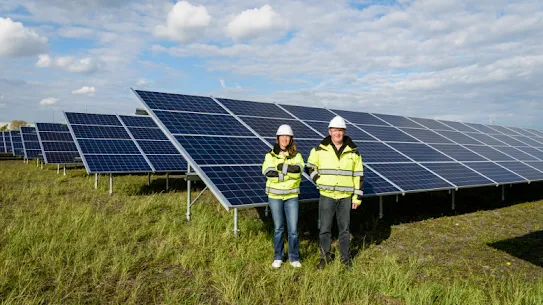
Google supports hundreds of local vendor jobs in maintenance, security, landscaping, HVAC repair, electrical work, and construction trades while building our data centers and after each is completed. A typical Google data center location in the U.S. adds $688 million in state economic activity each year.
While these projects are still in the early stages, similar projects typically generate 1,000+ construction jobs and hundreds of permanent positions with many paying over $100,000.
In 2026, Google announced a national commitment to help train more than 300,000 skilled workers across 20 states and endorsed eight new policy proposals that help scale training efforts, support workers, and encourage technology that empowers people. We localized and brought our skilled trades support to life at a community celebration in the Richmond area with local partners and community members. Alongside Governor Abigail Spanberger, we announced how the national $50 million skilled trades funding will help boost the projected pipeline of Virginia electrical workers by 137% by 2030, growing the next generation of American workers.
Google's Skilled Trades and Readiness (STAR) program facilitates equitable entry into construction and the skilled trades by equipping local workers and students with skills needed for jobs now and in the future digital economy. “With the pace and intense curriculum of the STAR Program, I felt informed enough to start my job with confidence when I got out into the field.” — Jemal Shabazz, Nebraska STAR Program Graduate in Fiber Optics.
We understand that projects of this scale naturally bring questions about how data centers operate and what they mean for the surrounding neighborhood and community. To provide clarity, we have compiled clear, fact-based information on this page about the proposed sites, our track record of responsible environmental stewardship, and the potential local impacts.
We invite you to explore the project details above, learn more about our plans, and engage with us throughout the planning process. If you have questions, contact our team at google-in-chesterfield@google.com.