Google’s approach to investing in data center communities
We have worked with communities around the world to build data centers for more than 20 years. Our goal has always been to set the industry standard and serve as long-term partners who can be counted on to do the right thing in the places we call home. We aim to build and operate our data centers the right way, invest deeply in communities, and generate significant local benefits — now and into the future.
No two communities are the same — and that’s why we’ve always started by listening and understanding what’s important to each place where we invest. At the same time, there are things that every community expects: being open and transparent in our work; ensuring consumers do not bear the costs of data centers; strengthening the grid; renewing and improving local resources, including water; paying full real property taxes for new campuses; funding local services; and creating local jobs.

Link to Youtube Video (visible only when JS is disabled)
Google has partnered with Pryor and Mayes County, Oklahoma since 2007.
Here are five areas core to our approach in every community:
1. Engaging transparently and proactively
- Eliminate the use of NDAs with state and local governments. Beyond that, we only seek confidentiality in limited cases, such as for trade secrets or information impacting the security of our operations.
- Disclose Google’s involvement in its projects early, either with our first application or first public meeting (whichever comes first).
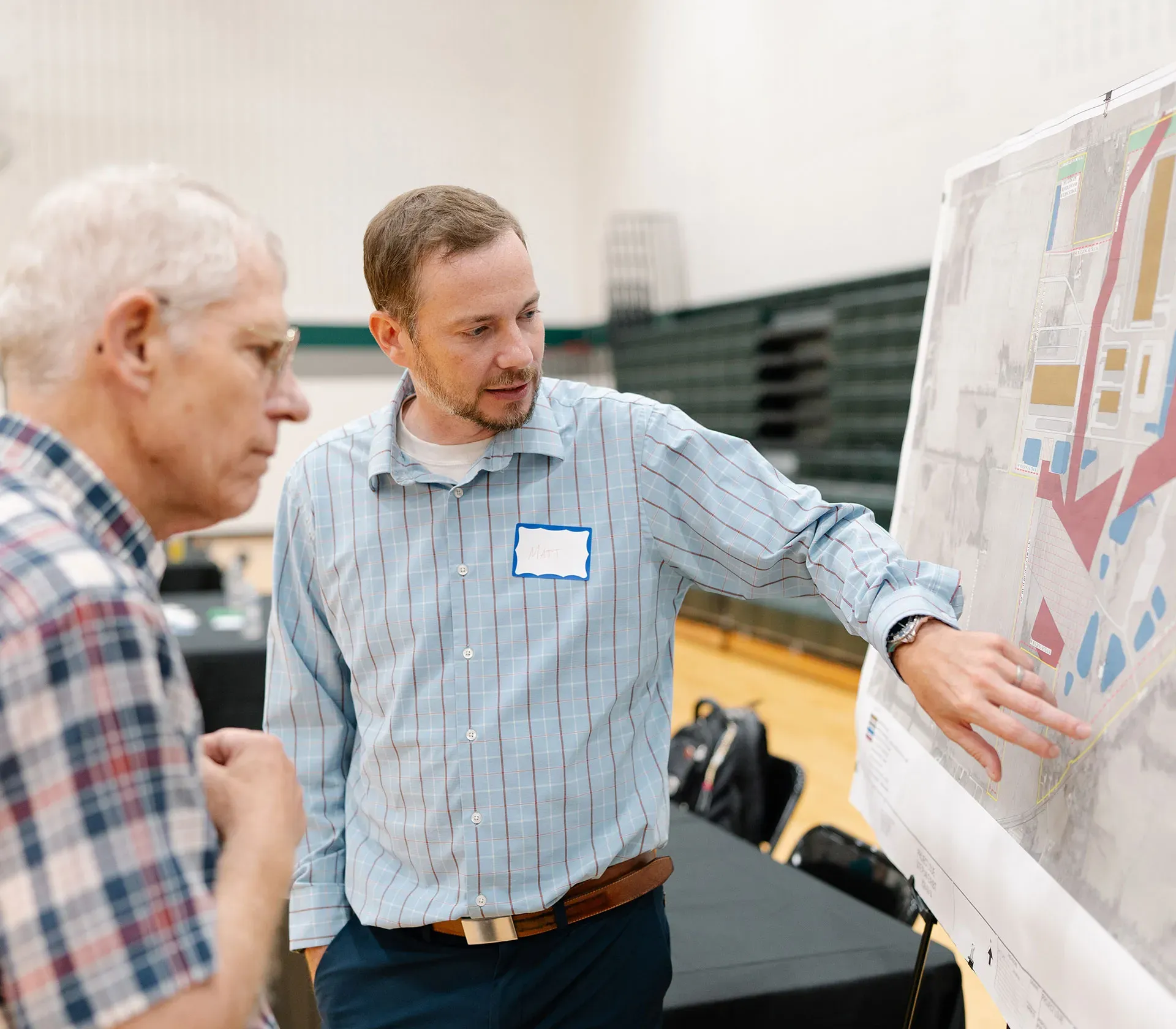
- Engage deeply with the community throughout our data center development process, including hosting town halls and establishing local advisory councils to serve as forums for us to listen, learn, and be informed by communities and their leaders.
- Publish additional project-level data about our use of resources in each community, such as water use, how we’re meeting sound and light limits, and any traffic impacts.

2. Protecting your electric bill
-
Pay for 100% of the power our data centers use and the direct infrastructure costs required to connect them to the grid, while following all appropriate local regulations. Google’s responsible approach to contracting with utilities is already resulting in ratepayer savings in many states and countries.
-
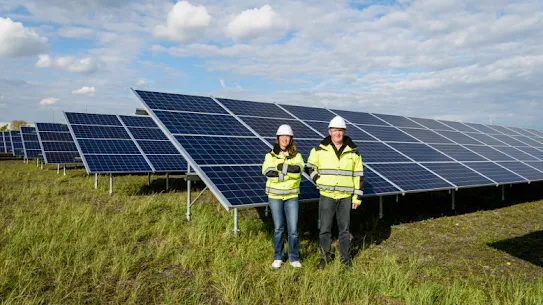
Invest in energy generation to add capacity and help lower costs for ratepayers. We co-locate data centers with dedicated power generation where practical. From 2010 to 2025, Google signed agreements to enable nearly 35 GW of new, clean energy for local grids around the world, including solar, geothermal, nuclear, natural gas with CCS, and wind.
-
Help strengthen energy grids where we operate by reducing our power use during periods of peak demand where feasible, which can lower costs for customers. As an example, we have already integrated 1 GW of demand response capacity into our long-term energy contracts with multiple utilities across the United States, which directly makes capacity available for others, supporting reliable and affordable power. And we are investing in other types of flexible resources around the world, such as long-duration energy storage.
- Help lower energy bills through innovative programs like our Energy Impact Funds, making homes in data center communities more efficient to save energy costs. We also have developed heat recovery projects that enable our data centers to provide local businesses and homes with sustainable heat, free of charge.
3. Minimizing our impact on local resources
-
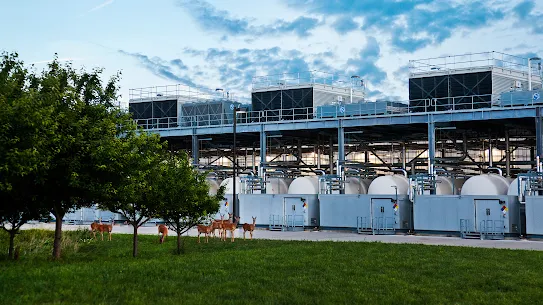
Engage in responsible water stewardship. Google uses a data-driven water risk framework to assess local watersheds, and only considers water cooling if local resources are healthy and resilient. Google has decades of experience in water stewardship, including an ambition to replenish more freshwater than we consume by 2030.
-
Mitigate noise for our residential neighbors and ensure all Google data centers operate at or below local regulatory sound limits.
- Minimize any light pollution through practices such as downlighting, timers, and other mechanisms.


4. Investing in the community
-
Pay full real property taxes. For all new campuses, Google will pay full real property taxes on our data center buildings and land. This ensures our tax contributions provide local communities with a long-term, predictable, recurring stream of revenue to fund vital public services like firefighters, teachers, park maintenance, and other local services and infrastructure.
-
Invest in local community services through our Community Partnership Program, providing money to support local schools, libraries, and more — all in consultation with community leaders.
- Support local businesses with free Google training and tools — building on the more than three million small businesses across America and 35 million globally we have helped to date, and the more than 2,300 small businesses around the world we have supported through the Google Data Center AI Fellowship with 30,000 hours of free technical assistance.
5. Local jobs and hiring
-
Hire employees and suppliers from the local community as a first priority. By partnering with local suppliers, general contractors, and service providers, our infrastructure buildout fuels employment in advanced manufacturing, licensed trades, network operations, and local small businesses.
-
Support training, apprenticeships, and entrepreneurship in communities where we operate. Our STAR (Skilled Trades and Readiness) workforce program, which trains individuals for careers in construction and the skilled trades, has a 96% hire rate. And through the Alliance for America’s Skilled Trades, we conduct workforce training across the United States as part of our commitment to train more than 300,000 American workers for in-demand, high-paying careers.
- Continue to partner on long-term skilling programs with major labor organizations, including with the International Brotherhood of Electrical Workers (IBEW), the National Electrical Contractors Association (NECA), North America’s Building Trades Unions (NABTU), Sheet Metal, Air, Rail, and Transportation (SMART) Workers, Sheet Metal and Air Conditioning Contractors (SMACNA), Mechanical Contractors Association of America (MCAA), and others.

Building on our decades of data center development around the world, this approach is designed to deliver meaningful value to every community in which we operate. That value goes beyond the economic benefits that come from property taxes, infrastructure and grid investment, and hiring: in the United States through the end of 2027, we expect to invest $1 billion in locally tailored programs in data center communities, designed specifically to advance local priorities and benefit local residents.
We will continue to listen, learn, and support our local communities wherever we operate.