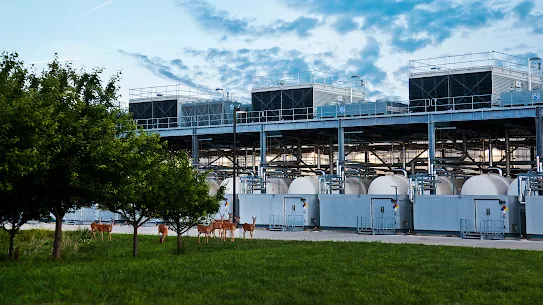
Discovering Data Centers
Season 1, Episode 5
“How does Google select a data center location?”
From securing to designing, learn what criteria make a location viable for a Google data center.

Watch
Link to Youtube Video (visible only when JS is disabled)
How does Google select a data center location?
[00:08] by now you probably understand that google customizes a lot of our data center design this customization traces back to
[00:14] the beginning of a data center story where it lives so how do we select our data center sites data
[00:21] center site selection is all about balancing a variety of factors a data center location has to have the right
[00:28] combination of energy infrastructure proximity to our users available workforce and available land some of our data center campuses are
[00:36] the size of hundreds of american football fields yeah that's a lot of touchdowns one of the first things to
[00:42] assess is exposure to natural disasters areas that are prone to earthquakes extreme weather events or floods aren't good candidates
[00:51] to house thousands of machines though sometimes it's unavoidable for what we're looking for so we accommodate through our designs
[00:58] in case unexpected scenarios arise we've designed for redundant power supplies and data replication fiber network connectivity is another factor
[01:07] understanding latency limits and distance to nearby points of presence or network access points is a major piece of the
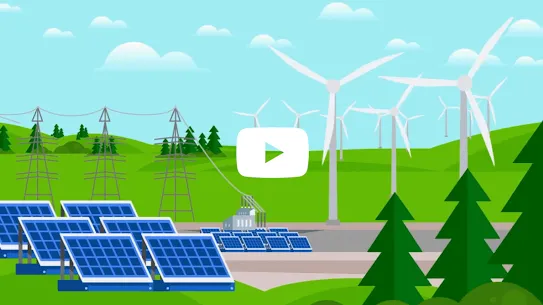
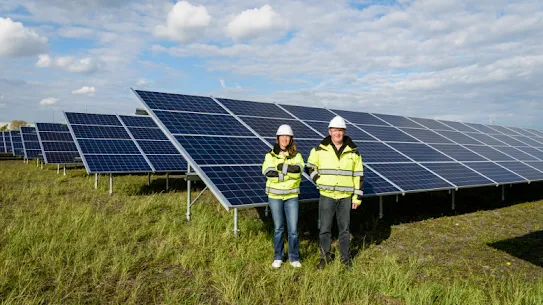
[01:13] puzzle and since power is a high ongoing cost and impacts the environment we always search for reliable and efficient
[01:20] carbon free energy options to ensure sustainable operations around the clock areas with temperate climates or other suitable environments provide
[01:28] options for 100 outdoor air or water cooling to augment or replace mechanical air conditioning and add a cherry on
[01:36] top finding sites with unique geographic qualities can improve environmental performance for example our data center in belgium uses recycled
[01:45] water from a nearby industrial canal to cool its servers making it more sustainable and the first google data center
[01:52] to eliminate refrigerated cooling in finland we transformed an old paper mill located next to the bay of finland into
[01:59] a data center the bay's water sitting at 57 degrees fahrenheit or 14 degrees celsius all year round allows us
[02:06] to use sea water to cool the data center our taiwan data center is one of asia's most efficient and
[02:12] environmentally friendly our nighttime cooling and thermal energy storage system cools water at night when temperatures are lower storing it
[02:20] in large insulated tanks then during the day it's pumped throughout the facility to cool our servers thanks in part
[02:27] to our partnership with dutch farmer cooperatives our data center in the netherlands sources carbon-free power directly from local wind
[02:34] farms our data center in ireland uses an advanced air cooling system that takes advantage of ireland's temperate weather to
[02:42] keep our servers running smoothly as a result the data center can be cooled efficiently with outdoor air instead of
[02:49] air conditioning units as you can see there's no one-size-fits-all for google data centers each one is built to adapt
[02:56] to local strengths and thrive but what does this mean for you at home and our real world applications find
[03:04] out next time on discovering data