Driving sustainable innovation for society
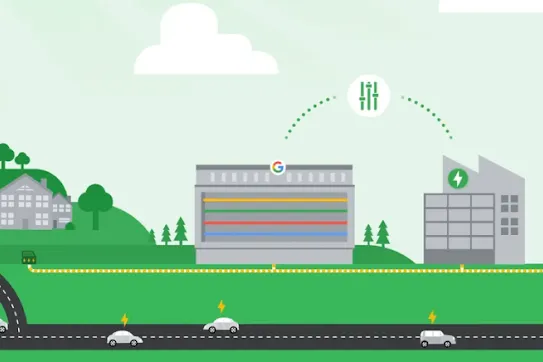
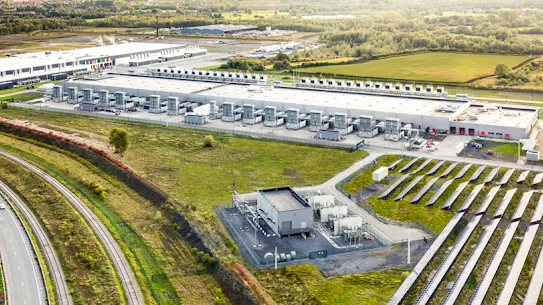
We're bringing more clean energy online and advancing responsible water use at our data centers across the globe.
Advancing sustainable water solutions at our data centers and beyond
Pursuing a holistic approach to water stewardship
Water cooling is an energy-efficient way to remove heat, and is often a more sustainable option compared to other cooling methods such as chillers or air conditioning. At each data center campus, we take a climate-conscious approach to our cooling decisions — balancing the availability of carbon-free energy and responsibly-sourced water, including alternatives to freshwater — to minimize the net climate impact both today and in the future.
Beyond our data center facilities, we seek to benefit watersheds and communities by supporting locally relevant projects that replenish our freshwater consumption and support ecosystems.
1For details about the calculation, refer to the Methodology section in Detailed disclosures section of our 2026 Environmental Report.

A sunset over St. Ghislain, Belgium, illuminates our water storage tanks and cooling towers.
Helping build the systems needed to power a brighter future for all
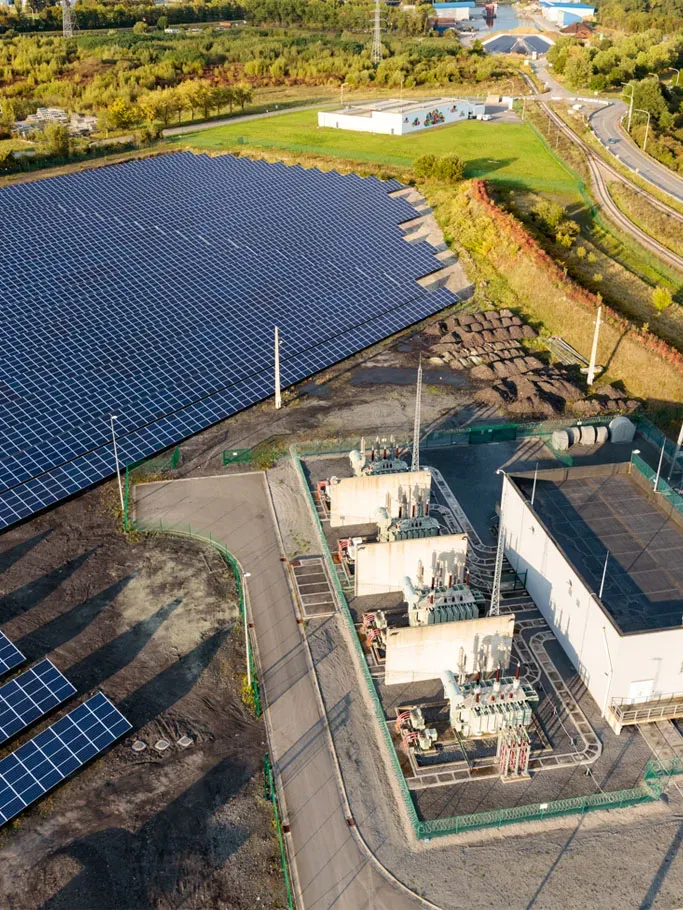
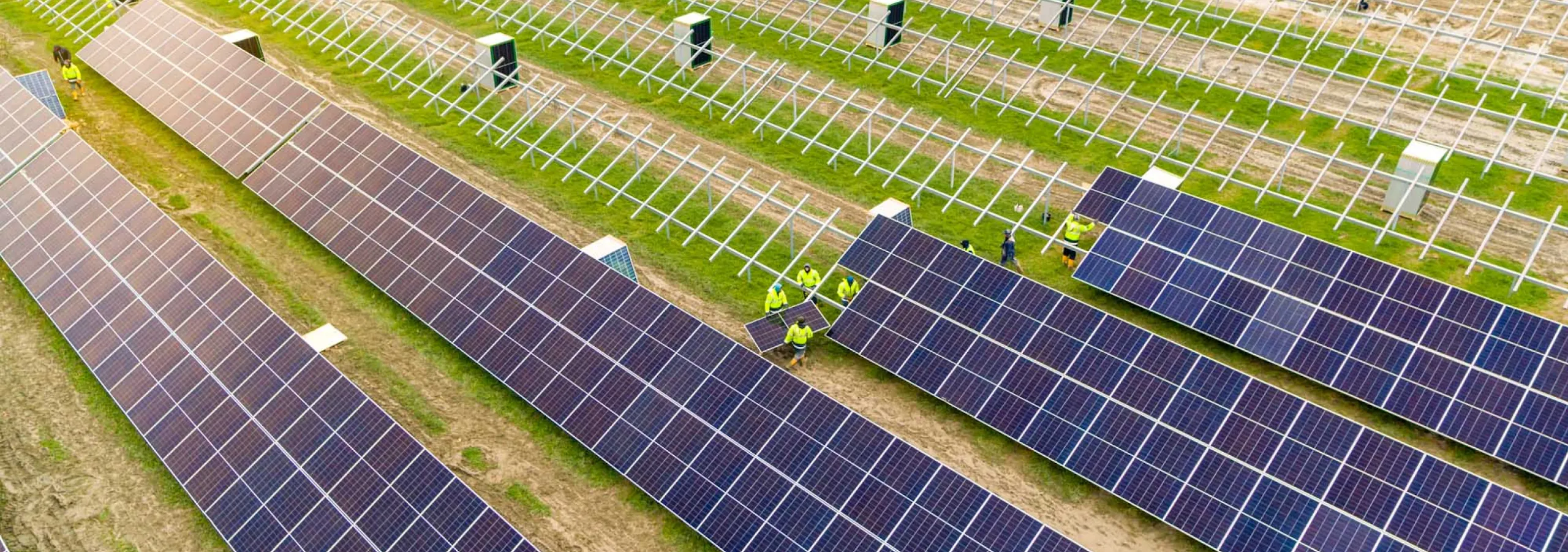
The Google solar field at our St. Ghislain, Belgium, data center.
We believe in energy solutions that benefit everyone
That’s why we prioritize affordable, reliable, and clean energy in the communities we call home. Our track record demonstrates this commitment. Since 2010, we have signed over 170 agreements to purchase more than 22 gigawatts of clean energy worldwide and invested over $3.7 billion in clean energy projects and partnerships. These efforts have allowed us to maintain a 100% renewable energy match on a global basis every year since 2017.
Ultimately, Google's ambition is to power our operations with carbon-free energy, every hour of every day. By leveraging proven technologies and investing in cutting-edge research, we are powering possibility everywhere we plug in.
Zeroing in on net-zero emissions
AI stack efficiencies
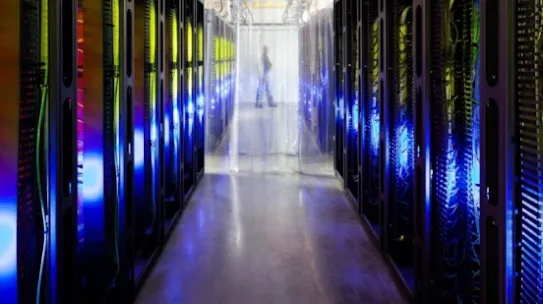
We’re investing heavily in efficiency across our AI stack—from infrastructure and chip design to model deployment. At the data center level, we’ve been leaders in developing extremely energy efficient facilities. Google’s data centers are among the industry’s most efficient, operating with a 2025 fleet-wide average power usage effectiveness (PUE) of 1.09 and using 83% less overhead energy than the industry average.2
2PUE (power usage effectiveness) is a standard industry ratio that compares the amount of non-computing overhead energy (used for things like cooling and power distribution) to the amount of energy used to power IT equipment. For example, a PUE of 2.0 means that for every watt of IT power, an additional watt is consumed to cool and distribute power to the IT equipment. A PUE closer to 1.0 means nearly all the energy is used for computing. According to the Uptime Institute’s 2025 Global Data Center Survey, the global average PUE of respondents’ data centers was 1.54. The overhead energy use comparison was calculated as follows: (1 - (Google’s overhead energy use [0.09] divided by the industry average overhead energy use [0.54])) x 100 = 83%.
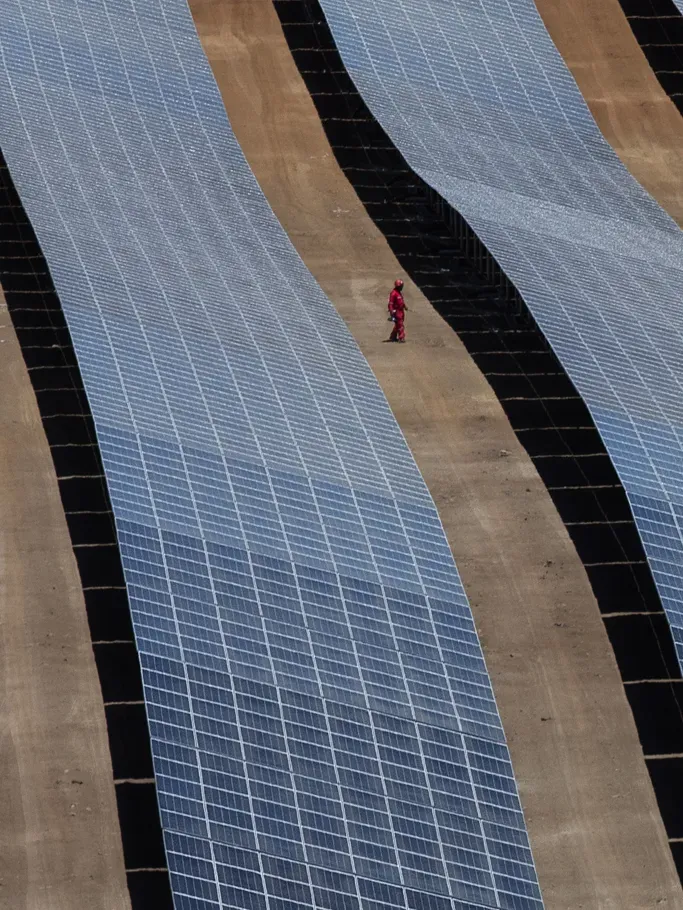
Solar power from Acciona Solar in Chile provides energy to our data center in Quilicura, Chile.
Frequently asked questions
In 2021, we set an ambition to reach net-zero emissions across all of our operations and value chain by 2030. To meet this ambition, we aim to reduce over time our absolute, combined scope 1, 2 (market-based), and 3 emissions by 50% from a 2019 base year, and we plan to invest in a range of carbon removal solutions to neutralize our remaining emissions.
A component of this moonshot is another ambition — running on 24/7 carbon-free energy on every grid where we operate by 2030.
At Google, we’re deeply committed to responsibly managing the environmental footprint of our operations and unlocking the power of AI for the planet. While the path to achieving our climate ambitions will not be linear—given our AI infrastructure buildout is currently accelerating faster than the grid is decarbonizing—we remain focused on scaling abundant and affordable clean power globally and progressing technological innovations that drive down emissions across our operations and the broader industry.
Google is one of the world’s largest corporate purchasers of clean energy in the world. We remain focused on scaling abundant and affordable clean power globally and progressing technological innovations that drive down emissions across our operations and the broader industry.
The AI revolution has made the last five years especially transformative, and we’re proud of the progress we’ve achieved. In 2025 alone, we signed agreements for over 12 GW of net-new clean energy1. By combining this record-breaking procurement with our industry-leading infrastructure, we’re working to ensure that every megawatt is used as efficiently as possible. We’re investing in reliable, clean capacity on the local grids that support our data centers, and we’re advancing the next generation of clean energy sources like nuclear and enhanced geothermal while making long-term bets on breakthrough technologies like fusion.
For more details, check out our latest 2026 Environmental Report.
1The total GW figure represents clean energy procured through power purchase agreements, energy storage agreements, and agreements under which Google receives environmental attribute certificates. Actual generation may vary from contracted amounts based on project modifications, terminations, and performance.
We buy electricity directly from new clean energy projects through various methods depending on the market, including: contracting directly via long-term power purchase agreements (PPAs); working with utilities or developers to buy and deliver carbon-free energy (CFE); structuring energy supply contracts with energy providers; and making targeted investments in renewable energy to enable additional projects on the grid. See the 2026 Environmental Report for more information.
Google is committed to being an active member in the communities we call home. Close collaboration with community leaders, local utilities, and local organizations is a priority for us to identify opportunities for meaningful community and global support.
See the 2026 Environmental Report for more information.
Innovating across our AI stack is the foundation of our strategy to minimize our systems' energy profile. This includes both increasing the energy efficiency of our data centers with custom-built hardware and more efficient model architecture and supporting grid reliability by using demand response and flexibility, when possible, to help grids meet their highest need events.
See the 2026 Environmental Report for more information.
Water plays an important role in our data centers — cooling our servers, regulating indoor temperatures, and keeping our products up and running. In fact, water cooling has been shown to help reduce energy consumption and related carbon emissions when compared to air-based cooling. While it will take more time for electricity grids to decarbonize, we’ll continue using water cooling to improve our energy efficiency in certain geographies. Recognizing that this tradeoff will increase our data center water footprint, we’re prioritizing responsible water use and water replenishment at new sites from the start.


Google is one of the world’s largest corporate purchasers of clean energy in the world. We remain focused on scaling abundant and affordable clean power globally and progressing technological innovations that drive down emissions across our operations and the broader industry.
The AI revolution has made the last five years especially transformative, and we’re proud of the progress we’ve achieved. In 2025 alone, we signed agreements for over 12 GW of net-new clean energy.1 By combining this record-breaking procurement with our industry-leading infrastructure, we’re working to ensure that every megawatt is used as efficiently\ as possible. We’re investing in reliable, clean capacity on the local grids that support our data centers, and we’re advancing the next generation of clean energy sources like nuclear and enhanced geothermal while making long-term bets on breakthrough technologies like fusion.
For more details, check out our 2026 Environmental Report.
1The total GW figure represents clean energy procured through power purchase agreements, energy storage agreements, and agreements under which Google receives environmental attribute certificates. Actual generation may vary from contracted amounts based on project modifications, terminations, and performance.
Google aims to “return” or improve the water quality and ecosystem health in the watersheds and communities where we operate through investments in water stewardship projects.